The Complete Guide to Interrail Night Trains: ÖBB Nightjet Sleeper & What to Expect
If you are thinking of interrailing, a sleeper train has likely crossed your mind. Personally, I feel taking a night train is part of the interrailing experience, and is a must-do if you want the full, classic interrail experience.
When I was planning my trip, I knew I wanted to do a night train. To me it just seemed like a really cool thing to do. Now, I want to be clear: I am no train lover in the Francis Bourgeois sense, but taking a sleeper train was definitely really really cool. However… there are definitely some things to be aware of before you choose to settle down (or try to settle down, at least) and sleep on a moving train.
This guide covers all of it, from what the OBB Nightjet actually is, to which countries you can reach, to what it genuinely feels like to sleep in a seat at midnight while someone shines a torch in your face at the border.
TL;DR (everything you need to know about OBB sleepers):
- The ÖBB Nightjet is Europe’s largest overnight sleeper train network, operated by Austrian Federal Railways, connecting over 20 countries including Germany, Italy, France, the Netherlands, and Poland.
- Interrail and Eurail pass holders can travel on the Nightjet, but a separate reservation fee is required on top of the pass – bookable directly through the Interrail website.
- Three accommodation types are available: a reclining seat (Sitzkurswagen), a shared couchette bunk with pillow and blanket (Liegewagen), and a private sleeper cabin with bedding and often breakfast included (Schlafwagen).
- Female travellers can request an all-female couchette compartment at the time of booking.
- Passport checks take place onboard at border crossings during the night – keep your documents easily accessible at all times.
- Trains typically arrive between 7am and 9am, so arranging bag storage in advance is recommended if accommodation check-in is not until the afternoon.
- Recommended packing essentials include a neck pillow, eye mask, earplugs, and a small bag for overnight items.
Related Posts
- What Is Interrailing & The Interrail Pass
- What to Take Interrailing
- My Ultimate Interrailling Route: 15 Destinations, 11 Countries, 5 Weeks Across Europe
- The Best 2-Week Interrail Routes for Your Interrail Adventure
- How to Plan Your Interrail Route: What Actually Works
What Is a Sleeper Train?
A sleeper train is a train that takes you from one destination to another overnight. They are generally fast, efficient, and a really smart way to cover serious distance on an Interrail trip without burning a full travel day. Instead of spending six hours on a daytime connection or paying for a one-night hotel, you use the overnight hours to move and wake up somewhere completely new.
There are a few different overnight operators across Europe, but the one you are most likely to encounter as an interrailer, especially on routes through Central and Western Europe, is the ÖBB Nightjet.
What is the ÖBB sleeper train?
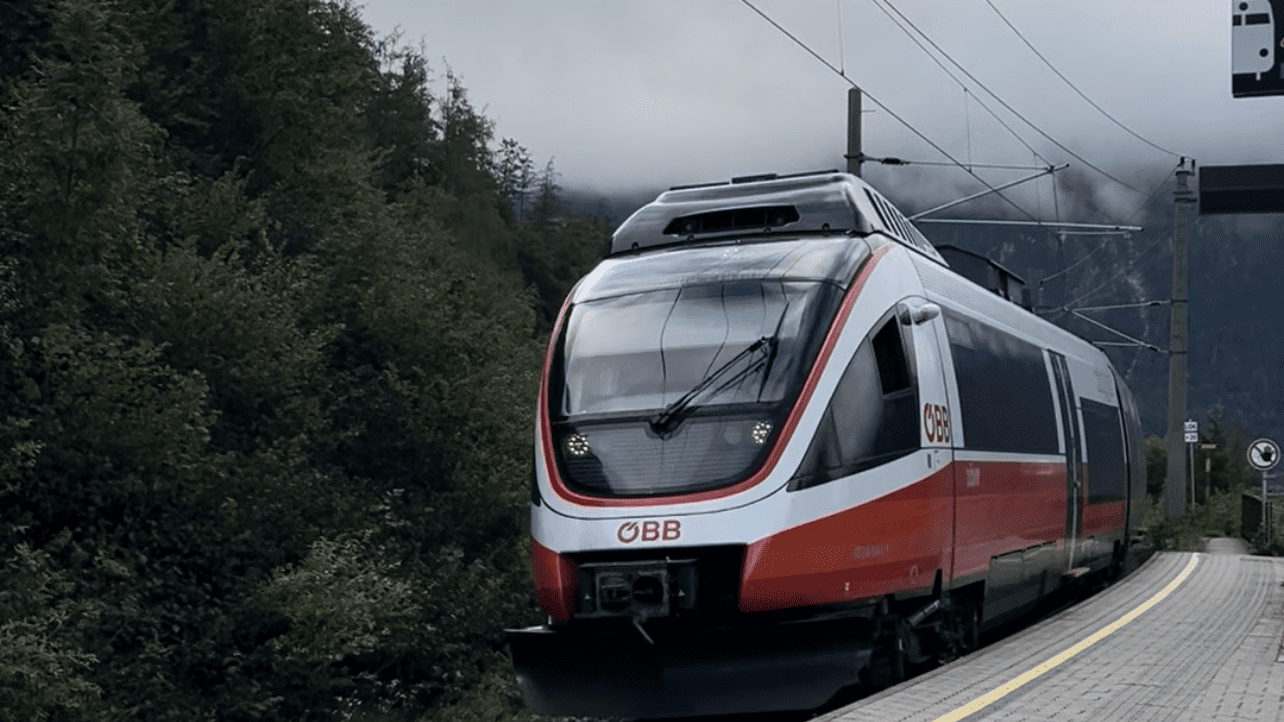
The OBB Nightjet is Europe’s most extensive overnight sleeper train service, operated by OBB, which stands for Osterreichische Bundesbahnen, or Austrian Federal Railways. Before you panic about the pronunciation, even the Europeans just call it the Nightjet or the OBB.
The OBB sleeper is one of the main routes you will likely find yourself on whilst interrailing, especially if you are doing any of the classic routes through Austria, Germany, Italy, and beyond. Right now it is one of the leading forces behind the huge night train revival happening across Europe, with new routes being added regularly. According to ÖBB, the service carries 493.6 million passengers every year across all its operations, and in 2025 the Nightjet recorded a punctuality rate of around 94%.
It is also worth knowing that taking the Nightjet instead of a short-haul flight produces considerably fewer carbon emissions. For climate-conscious travellers, it is not just a cool choice, it is a responsible one too.
What Countries Can You Take the ÖBB Nightjet Sleeper?
The Nightjet network spans a wide stretch of Europe and the list of countries keeps growing. Here is every country currently served as of 2026, along with the key cities and what each is best for.
| Country | Key Cities Served | Best For |
| Austria | Vienna, Innsbruck, Salzburg, Graz | Starting point for all routes |
| Germany | Berlin, Hamburg, Munich, Frankfurt, Cologne | City breaks, Interrail connections |
| Switzerland | Zurich, Basel, Bern | Alpine scenery, slow travel |
| Italy | Rome, Milan, Florence, Venice | City breaks, Italian adventures |
| France | Paris, Nice, Marseille | Culture, Riviera, city escapes |
| Belgium | Brussels | City breaks, Benelux base |
| Netherlands | Amsterdam | City breaks, popular route |
| Czech Republic | Prague | Central Europe city hops |
| Hungary | Budapest | Central Europe, city hops |
| Poland | Warsaw | Eastern Europe, newer route |
| Croatia | Zagreb and connections | Summer trips, Adriatic coast |
Austria
As the home of OBB, Austria is naturally the Nightjet hub. Vienna (Wien Hauptbahnhof) and Innsbruck are the two main departure and arrival points for international routes, with Salzburg, Graz, and Villach also appearing on various timetables. If you are basing yourself in Austria at any point, you are in the perfect position to jump on the Nightjet in almost any direction.
Germany
Germany is brilliantly well-connected into the Nightjet network. You can reach Berlin, Hamburg, Frankfurt, Munich, Cologne, and Düsseldorf depending on the route. Germany also acts as a through-country on several services heading further west, so you might pass through German cities even if they are not your final destination.
Switzerland
Switzerland is one of the most popular Nightjet destinations and for good reason. Zurich is the main hub, but routes also serve Basel and Bern. Arriving in Switzerland by sleeper train and waking up to the Alps outside the window is genuinely one of those travel moments you will talk about for years.
Italy
Italy is a big win for Nightjet travellers. Depending on the route you can reach Rome (Roma Termini), Milan, Florence (Firenze), Venice (Venezia), Verona, and Bologna. The overnight journey from Vienna to Rome in particular is a classic, covering a distance that would otherwise require a full day of connections or a flight.
France
The Nightjet expanded into France in a big way in recent years. Paris is now served by a direct Nightjet route, which is huge news if France is on your list. There is also a route running down to Nice and Marseille on the Riviera, making a slow travel trip along the south of France very achievable by overnight train.
Belgium
Brussels is on the Nightjet map, opening up connections to the broader Benelux region. The city itself is massively underrated as a base for exploring further, and the overnight route from Vienna or Innsbruck is a solid option.
Netherlands
Amsterdam is served by the Nightjet and it is one of the most popular overnight routes in the whole network. Waking up in Amsterdam with the whole day ahead of you is hard to beat.
Czech Republic
Prague is accessible via Nightjet and makes a fantastic addition to any Central European itinerary. The route connects well with Vienna, and it is a relatively short overnight journey, ideal if you want to maximise time in both cities.
Hungary
Budapest is served as both a starting point and a destination on various Nightjet routes. If you are doing a classic Central European city hop between Vienna, Prague, and Budapest, being able to travel those legs overnight is genuinely brilliant for your itinerary.
Poland
Warsaw is now part of the Nightjet network following recent expansion, and you can also travel the Berlin to Krakow route, which is the one I did on my own trip, and would recommend! Poland is a newer addition but it signals the direction OBB is heading, making Eastern Europe far more accessible for night train travellers.
Croatia
Croatia features on the Nightjet with routes serving Zagreb and connections further into the country. If you are planning a summer trip to the Dalmatian coast and want to skip the budget airline experience entirely, this is a great option.
Spain (Connecting Routes)
Spain does not currently have a direct Nightjet service, but you can travel to France by Nightjet and connect onward via Renfe-SNCF high-speed services. OBB has discussed future expansion toward Barcelona, so keep an eye on announcements.
Seat, Couchette, or Sleeper Cabin: What Is the Difference?
One of the questions I had when booking was: what is the difference between all the accommodation types, which one should I do, and what on earth am I actually paying for? I ended up going for the most budget-friendly option because it was cheaper and to bet honest I wanted the full chaotic interrail experience. Here is the full breakdown so you can decide what suits your trip.
Seat (Sitzkurswagen)
The most affordable option. You get a standard reclining seat in a regular train carriage. It works for shorter overnight journeys (think Vienna to Prague), but for longer routes and where you really do want a good night sleep – I genuinely recommend upgrading to at least a couchette. Sleeping upright for 14 hours is nobody’s idea of a good time. Though – part of me really recommends doing this experience – for the plot!
Couchette (Liegewagen)
This is the sweet spot for most travellers. A couchette is a fold-down bunk bed in a shared compartment. You get a pillow, blanket, and a bit of privacy, and the compartments typically hold four or six people. Solo women travellers: you can request an all-female couchette compartment when booking, which is a great option for extra peace of mind.
Private Sleeper Cabin (Schlafwagen)
The premium experience. Private sleeper cabins come with a proper bed, bedding, and often breakfast included. Single, double, and twin configurations are available. If you are travelling as a pair or treating yourself on a longer route, a private sleeper cabin is honestly worth every penny. It is cosy, it is fun, and you wake up feeling like you have had an actual night’s sleep.
| Accommodation | Best For | Privacy | Price Range |
| Seat | Short journeys, budget travel | Shared carriage | Lowest |
| Couchette | Most travellers, Interrail | Shared (4-6 people) | Mid-range |
| Private Sleeper | Couples, solo treat, long routes | Private cabin | Higher |
What Is It Actually Like to Sleep on the OBB?
Now, let me be very clear, my experience here comes from sleeping on seats – no couchette or no private room for me!
I travelled between Berlin and Krakow on the Nightjet in a standard seat, and I want to be straight with you: it is not the most luxurious sleep of your life. You are on a moving train, it is not fully dark, and the seats recline but they do not flatten out. You have people up in your space, it can get stuffy and there are people around you who snore. With all this – you will probably doze rather than sleep deeply, especially on your first time.
If I did it again I would make it more comfortable. I would bring a neck pillow that actually supports you (not one that gives you a crank in the neck), a small foldable blanket, an eye mask, and earplugs. These are honestly a must. It can be hard to fall asleep comfortably so just make sure you are prepared for that going in.
Despite with the negatives, I argue part of the beauty of interrailing is experiencing travel in this way. It is supposed to be a budget experience, and sleeping on a train in the most budget-friendly way possible is a genuine rite of passage.
How Do You Book OBB Nightjet Tickets?
Booking a Nightjet is straightforward once you know how the reservation system works.
If you already have an Interrail pass (for EU residents) or a Eurail pass (for non-EU travellers), the Nightjet is covered by your pass. However, you will still need to pay a separate reservation fee on top. The reservation fee varies by route and accommodation type but it is significantly cheaper than buying a full ticket outright. When I travelled I booked my seat reservations directly through the Interrail website, which is the simplest approach.
A few things worth knowing before you book:
- Reservation fees differ between seat, couchette, and private sleeper options, and prices vary by route
- For couchettes, request an all-female compartment at the time of booking if you want one, do not assume it will happen automatically
- Book early for popular routes like Amsterdam or Rome, reservation slots fill up
- Download or print your tickets before you board, signal can be patchy once you are moving
OBB Nightjet Tips I Wish Someone Had Told Me
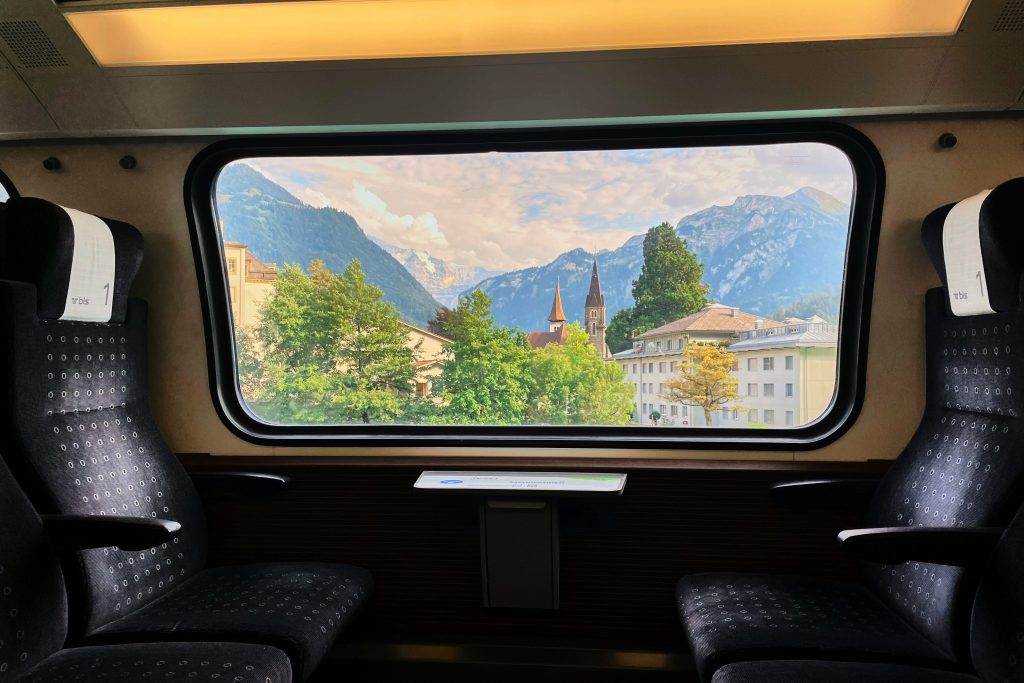
- Passport Control Checks: One of the unique things about the Nightjet is that you are often crossing international borders while you sleep. At around midnight on my Berlin to Krakow journey, the train stopped at the border and officers came aboard to check passports. They had big bright torches and came couchette by couchette. Looking back it was almost quite cinematic, but make sure you have your passport and Interrail pass easily accessible at all times. Do not bury them at the bottom of your bag.
- Pack a Small Bag: Put together a small bag or pouch with everything you need for the journey: your phone charger, eye mask, lip balm, passport, and train ticket. You do not want to be rummaging through a full backpack in a dark compartment at 2am. The Uniqlo crossbody bag is genuinely great for this. It has plenty of space for all your overnight essentials without being bulky.
- Download Your Seat Reservations And Tickets Before Boarding: Your tickets live on your phone, so make sure they are downloaded offline before you set off. Mobile signal and wifi can be patchy when crossing borders or going through tunnels, and you do not want to be that person desperately refreshing an app in front of a ticket inspector.
- Arrival Bag Storage: Night trains typically arrive between 7am and 9am. If your accommodation check-in is not until the afternoon, you need a plan for your bags. Most major stations have left luggage facilities, and booking these in advance is a genuine life saver. Arriving in a new city at 7am with nowhere to leave your bags is a very quick way to ruin your morning.
Final Verdict
So, is an OBB Nightjet worth it? Yes, genuinely. It is not always the most comfortable sleep of your life, and the passport check at midnight with a torch in your face is a lot. But it is one of those experiences that feels like proper interrailing. You move between countries while you sleep, you save on a night’s accommodation, and you wake up somewhere completely new with a full day ahead of you.
Go in prepared. Pack the neck pillow. Download the tickets. Know where you are leaving your bags on arrival. And if you can stretch the budget to a couchette, do it, or at least get early check-in at your next accommodation.
Ready to keep planning? Head over to our What to Take Interrailing guide for the full packing list, and if you want everything in one place, sign up to our email to grab a mini planner where you can map out your route, budget, and bookings before you go.
Interrailling and ÖBB FAQs
Yes, the Nightjet is covered by both Interrail and Eurail passes, but a separate seat reservation is compulsory on top of your pass. The reservation fee varies depending on your route and accommodation type (seat, couchette, or private sleeper cabin). It is significantly cheaper than buying a full ticket outright. Reservations can be made directly through the Interrail website.
The ÖBB Nightjet offers three accommodation types. A seat (Sitzkurswagen) is a standard reclining chair, the most budget-friendly option, best for shorter routes. A couchette (Liegewagen) is a fold-down bunk in a shared compartment of four to six people, with a pillow and blanket included. A private sleeper cabin (Schlafwagen) is a lockable room with a proper bed and bedding, often including breakfast, the most comfortable option for longer journeys or travelling as a couple but equally the most expensive.
The essentials for a comfortable Nightjet journey are: a neck pillow, a lightweight blanket or liner, an eye mask, and earplugs. Pack a small crossbody bag or pouch for overnight items, your phone charger, documents, passport, and train tickets, so you are not rummaging through luggage in a dark compartment. Download your tickets offline before boarding, and have a plan for bag storage on arrival, as trains often pull in between 7am and 9am.
For many European routes, the Nightjet is a genuinely strong alternative to flying. Especially, if you have already purchased the interrail pass. You save the cost of a night’s accommodation, avoid airport hassle, and arrive in the city centre ready to explore. ÖBB reports a punctuality rate of around 94% for 2025, and the carbon footprint is considerably lower than a short-haul flight. The experience, waking up in a new city (potentially half dead), is also a highlight and right of passage of interrailing that you simply cannot replicate at 30,000 feet.
Author
Why Readers Trust Travel Girls Corner
Travel Girls Corner is built by women who genuinely love to travel, and who actually do it. Every guide, itinerary, and recommendation is written by female travellers who are constantly exploring the world, from long European rail adventures to far-flung global escapes.
Our founder has been travelling for years, including a five-week Interrail journey across Europe, and many of our contributors are always on the move, discovering new cities, revisiting favourites, and keeping our guides modern and up to date.
What makes us different?
- Travel guides written exclusively by women
- Authentic, firsthand experiences combined with curated research
- Hidden gems alongside iconic highlights
- Modern, comprehensive city guides, not just surface-level lists
- Real recommendations we genuinely love
We go beyond tourist attractions. You will find stylish jazz bars, local neighbourhood cafes, boutique stays, cultural spots, practical transport advice, and detailed planning support, all designed to help women travel confidently and experience destinations fully.
We are not a faceless travel blog brand. We are ordinary women who travel often, care deeply, and share what we discover. Meet the team here.
Editorial Policy
At Travel Girls Corner, everything we share is rooted in real travel experiences. Our content is created by a team of women travelers of different ages and backgrounds, offering well-rounded perspectives on destinations, itineraries, and travel tips. We are always welcoming more women to join our team, helping us amplify diverse voices and share even more amazing travel experiences.
We combine personal experience with thoughtful research to provide accurate, practical, and honest guidance. While we strive to ensure information is as current as possible at the time of publication, travel details like opening hours, transport schedules, or local conditions can change. We encourage readers to double-check important details before planning their trips.
Some links on this site may be affiliate links, which means we may earn a small commission at no extra cost to you. This helps us keep Travel Girls Corner running while continuing to share authentic, experience-led travel content.
Every recommendation, guide, and tip reflects experiences we genuinely love, from hidden gems to must-see highlights. We do not exaggerate or sensationalize; we share what we truly encounter and enjoy, with honesty and integrity at the heart of our editorial approach.