How to Plan Your Interrail Route: What Actually Works
So, You Want to Plan an Interrail Trip. Where Do You Even Start?
Let me be honest with you. When I started planning my interrail trip, I opened about fifteen tabs, stressed myself out within twenty minutes, and nearly talked myself out of the whole thing. Picking cities felt easy (to an extent). Connecting them into an actual workable route? That was another story entirely.
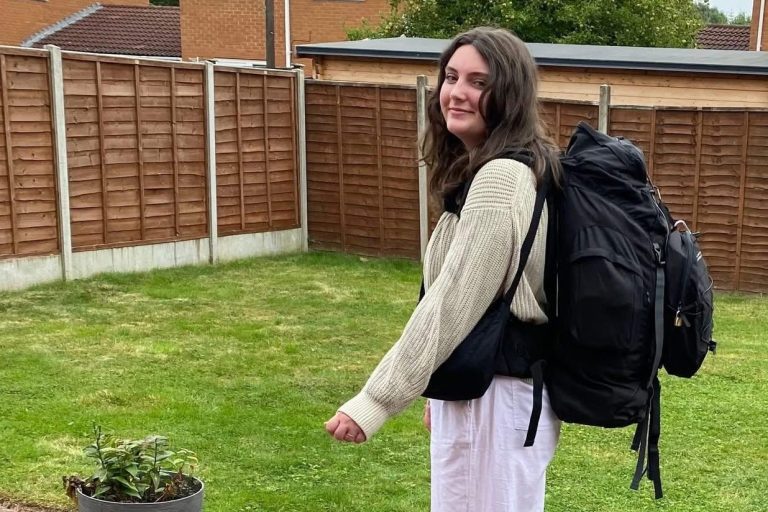
I ended up doing a five-week interrail journey across Europe with my travel partner, and it genuinely changed how I view and plan travel. We got a lot right, we got a few things spectacularly wrong, and somewhere in between we had the best trip of our lives. This guide is everything I wish someone had told me before I left.
Whether you’re planning solo, in a couple or with a group, this is the honest version: the budgeting, the kit, the mistakes, and the bits that made it all worth it. I hope you find value in my experience and I can prepare you for a fabulous trip away!
Fancy stealing my interrail route?!… unlock it here!
Summary
- Planning your interrail route starts with listing your non-negotiables, not your full wishlist.
- Mix cities with nature to avoid burnout and keep your budget in check.
- Sleeper trains save money but need an early check-in plan or you will spend your morning in a McDonald’s. Trust me.
- Pack light, carry some cash, and always have emergency money behind you.
- Safety kit (rape alarm, personal safety plan) is not optional. It is essential.
- A 5-week trip across Europe can be done for around £3,500, including everything, without scrimping.
How to Choose Your Interrail Route
Choosing your interrail route feels overwhelming at first, and that is completely normal. You want it to be perfect, you want no regrets, and you want to fit in every place you’ve ever seen on TikTok. But here’s the thing: the best interrail routes are built on strategy, compromise, and being honest about what actually matters to you.
1. Start With What’s Already in Your Head
Before you open a map or a blog, just write down the destinations you want to visit off the top of your head. Don’t overthink it. The ones that come to mind first are usually the ones you really mean, and those should anchor your route. Everything else can be built around them.
2. Pick One Non-Negotiable
If you’re travelling with someone else, this is the single best planning technique I can give you. Everyone gets to pick one destination that is completely non-negotiable. As long as it’s geographically realistic, the whole group commits to making it work.
On my trip, I was set on Dubrovnik. My partner wanted Prague, Budapest and Vienna. So we built a route that got all of us there. It sounds obvious but having that conversation early on stops a lot of resentment later in the trip, and to be frank, if you are spending thousands of pounds to go on this trip, you sure as hell best be seeing the place that you want to see!
3. Research Destinations
There are some brilliant resources out there beyond the official travel guides. Blogs like The Blonde Abroad and Emily Luxton Travels are great starting points for destination inspiration. TikTok is genuinely underrated for finding hidden gems that never make it into the guidebooks. Our own blog and TikTok are full of destination content too, so start there if you want the honest, experience-led version of each city.
Official guides tend to focus on the big-ticket sights. The interesting stuff comes from people who have actually been there recently, have explored the back streets and have gone beyond the postcard destinations.
4. Think About When You Travel
This matters more than most people factor in at the planning stage. Shoulder season (April to May, September to October) gives you fewer crowds, better prices and genuinely nice weather in most of Europe. July and August can be brutal in southern cities, expensive everywhere, and every hostel dorm feels like a packed festival campsite. I have been on one too many holidays in the boiling heat to know that interrailing in the scorching heat sounds awful. So be smart and careful.
If your dates are flexible, build your route around them. If not, plan with peak season in mind and book accommodation earlier than you think you need to. Unfortunately, not all of us will be able to get around travelling in peak season, but planning ahead and foreseeing potential cost increases can really help keep the prices down.
What We Got Right
1. Balance Between City & Nature
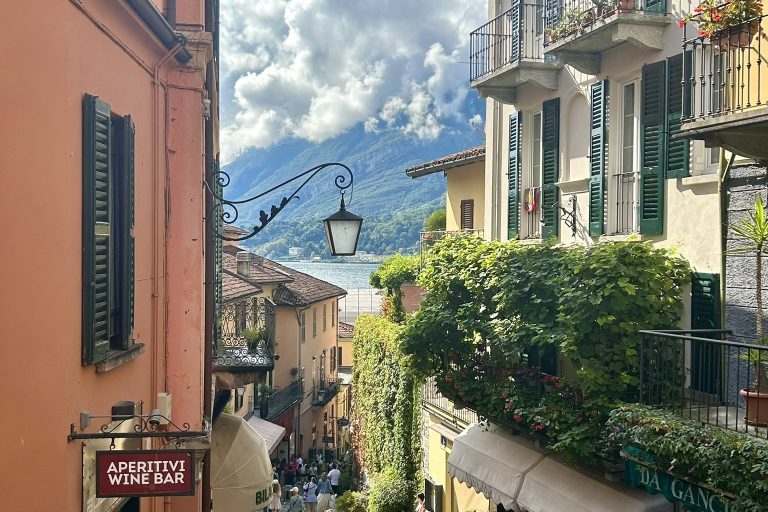
This is the thing I am most proud of in our route planning, and it made an enormous difference to how the trip felt. We did not spend the entire five weeks city-hopping, instead we mixed big cities with quieter, more natural destinations. This was an essential to keep me sane. Being in a city constantly is overstimulating and expensive. Adding places like Lake Como into the mix gave us breathing space, proper rest, and some of the most beautiful days of the entire trip. If you are building a long route, please do not skip this. Your mind and your budget will thank you.
2. Our Travel Essentials (The Kit That Actually Helped)
If you’ve been around Travel Girls Corner for a while, you know I love a practical recommendation. These three things made a genuine difference on our trip.
| Item | Why You Need It |
| Packing Cubes | Keeps everything organised and compresses your clothes so you can actually fit five weeks into one bag. A game changer. |
| Crease Release Spray | Your clothes will get crumpled. A small bottle of crease release spray (around £2 from Home Bargains) means you can still look put together. |
| Bike Lock | Thread it through your bag straps and attach it to the luggage rack on the train. You can actually sleep without one eye open. A weirdly handy item. |
3. Prioritising Budget Without Holding Back
I want to be really clear about this: I did not cut corners on my trip. I ate well, I stayed in well-reviewed places, and if I wanted to do something I did it. A five-week trip across Europe, including everything from flights to ice cream, came to around £3,500.
The way that worked was setting a nightly accommodation budget of around 50 euros and being intentional about where I spent the rest. Walking tours and free sights are abundant across European cities. Most of the best views in places like Berlin or Prague cost you nothing. I saved money there and spent it on things that actually mattered to me: food, local cuisine, and a few experiences worth paying for (like a boat on Lake Bled and Lime scooters around Berlin).
Be honest with yourself about where your money tends to go. Are you a chronic souvenir buyer? Do you care more about activities than food? Once you know that, budgeting becomes a lot more straightforward. I always knew that I was going to spend money on food, I am a foodie, so naturally I was happy to put my money there instead of going on a night out, for example.
Budget Tip
Track your spending for the first week in detail. You will quickly spot patterns you didn’t expect (looking at you, fresh pastry habit) and can adjust before it adds up.
Carry a small expenses tracker, digital planner like our travel planners, or use a free app so nothing sneaks up on you.
4. Spliting Responsibilities
When I we were planning our travels one person booked all the trains. The other booked all the accommodation. This kept things equal and meant neither of us was doing everything. However, there is one major caveat here, especially if you are looking to save money in the long run.
If you’re using apps and websites like Booking.com, remember they often come with loyalty schemes. Loyalty points and Genius status accrue to whoever does the booking. My suggestion would be to split the booking of the accommodation and the booking of other expenses equally. For example, person one handles accommodation for the first leg, person two handles it for the second. That way you both build points equally and no one is stung in the ass.
5. Sleeper Trains: Saving Money & Time
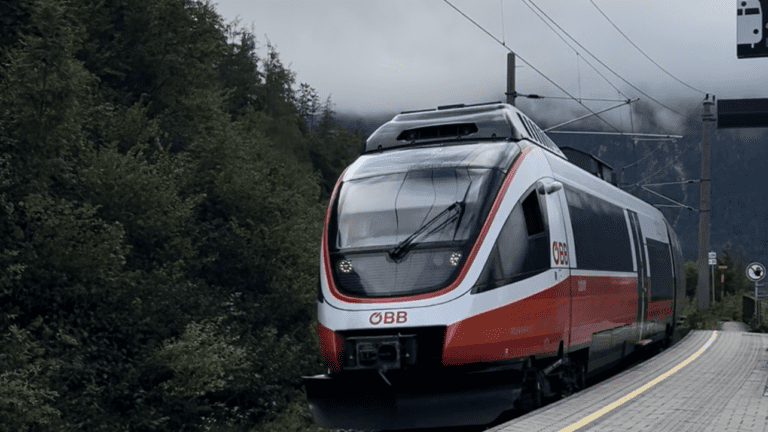
Taking a sleeper train means you travel overnight and wake up in your next destination. One less night of accommodation to pay for, and you don’t lose a full day to transit. In theory, it is genius, and I am glad we did it! Especially because it was a cool experience. So, as part of your interrail journey I can’t express enough how much you should take an overnight sleeper.
However, in practice, you need to be prepared. Sleeper trains are not the same as sleeping in your own bed. Take an eye mask, ear plugs, and comfortable clothes. If you can, book a couchette berth rather than a seat. And crucially: sort out early check-in at your next accommodation, or at least arrange luggage storage. I’ll explain why that matters in the next section.
What I Would Change And My Reccomendations
1. Late Check-Ins After Sleeper Trains
This is the lesson I learned the hard way, and I will not let my fellow sleep lovers make the same mistake.
Picture this: we arrived in Budapest on a sleeper train at around 6am. I had not slept properly and every single cell in my body wanted to lie down. We couldn’t check into our apartment for hours – until 2pm. We tried to find a hotel we could walk into that morning and they were all far too expensive for a last-minute booking. So instead, we sat in a McDonald’s for what felt like an eternity, and at one point we lay on a park bench next to the parliament. Which sounds lovely right! Yeh… but not when you feel and look like a zombie.
Luckily the fix is relatively simple: if you’re booking a sleeper train, always add early check-in to your accommodation. Most hotels will allow it for a small fee. Pay it. It is absolutely worth it. If you are staying in private accommodation, message your landlord and ask if it’s possible to get early entry or at the very least drop your bags off at the accommodation. Your back will thank you and the day will soon become a lot more pleasant.
2. Prague and the Tram Fine
Now I am not proud of this one but there came a point in our trip where buying tram tickets was feeling inconvenient, so we decided to just… not. We got caught. The fine was around 30 euros each. Mathematically it might have been cheaper than all the tickets but you just don’t need the mid-trip stress of a fine, and in some cities the fines can be significantly higher. So be smart and be the goodie toe shoes and buy those tickets (… especially in Prague ;)).
Always Keep Emergency Money
Near the end of our trip, we were supposed to take a FlixBus from Split to Dubrovnik. The bus cancelled due to bad weather, which led to a frantic search for alternatives, and ultimately it ended up with us splitting a taxi with six strangers. Total cost: 500 euros between eight people. We were lucky it was eight.
Always have a financial buffer behind you. Something unexpected will happen on a long trip. It is just a matter of what and when.
3. My Biggest Mistake: Get Your Postcards and Souvenirs As You Go
This sounds like a small thing but I still think about it. I had a plan to collect postcards from every destination and make a wall display when I got home. I kept telling myself I’d find a better one at the next market, or “oh I will get one later”. I didn’t. I now have gaps on my postcard wall and an inexplicable sense of loss about it.
Buy the postcard. Buy the magnet. Do it on the day you arrive. Future you will be grateful and you won’t be sat staring at a half completed puzzle for years to come.
3. Always Carry Cash
Plenty of places across Europe, especially smaller bakeries, local markets and family-run restaurants, still prefer or only accept cash. I didn’t carry too much (about 100 – 200 euros for the 5 weeks) and so I ended up making a few ATM trips with added fees each time.
However, I would say that carrying 100 to 200 euros in cash as a float is sensible. Don’t carry your whole budget in notes, but having some on you at all times will save you a lot of inconvenience.
4. Personal Safety as a Woman on an Interrail Trip
I want to talk about this properly, because I think it often gets either glossed over or made to feel scary. It doesn’t need to be either, but unfortunately, it does need to be talked about and digested.
Nothing negative happened to me on my trip. Europe is generally deemed one of the safer places to travel. But looking back, I would take a few extra precautions, not out of fear, but because being prepared is the smart way to travel.
- A rape alarm is small, cheap, and a genuine deterrent. Carry one.
- Deep Heat spray can be used as a deterrent in an emergency situation if you are ever made to feel unsafe. Spray it in their eyes.
- Self-defence basics are worth learning before you go. If in-person classes aren’t possible, YouTube has solid beginner tutorials.
- Trust your instincts. If something feels off in a hostel, on a night out, or with a person you’ve just met, you are allowed to remove yourself from that situation without explanation.
- Keep your accommodation address and local emergency numbers saved offline, not just in a tab you need signal to open. Be careful that others don’t see your private details, keep them hidden, safe and try not to drop them or leave them behind – it’s too easy for someone to find them and follow/find you.
- Know your local emergency numbers.
These are not reasons to be scared. They are reasons to feel confident. A little preparation goes a long way.
Final Verdict
Yes. There is no doubt. Interrailing is a one in a lifetime experience and I would encourage everyone, especially when they are young and able to take the opportunity to do it. 5 weeks, 10 countries, it was the kind of trip you reference for years afterwards as a measuring stick for every other travel experience.
Will things go wrong? Absolutely. You will miss a train, sleep badly, end up in a McDonald’s at 6am in Budapest waiting to check in. That is interrailing. Those are also, weirdly, some of the stories you tell the most. However, it’s not going to harm you to take some of my advice and make your trip just a little bit more cushiony than mine.
What I want you to take from this guide is simple: plan with intention, be honest about your budget and your non-negotiables, do not compromise too much on your one in a lifetime trip, do your research on the places you want to visit, ensure balance, split responsibilities, carry cash, take your safety seriously, and get early check-ins!! Do those things and the rest tends to take care of itself.
Now go book the trip. You are ready.
Ready to Plan Your Interrail Trip?
If you’re ready to start planning, head over to our full Interrail Hub for city guides, itinerary ideas, packing guides, and destination inspiration. And if you want a proper planning head start, our digital city planners for iPad and Androids have everything you need in one place. I recommend you buy the interrail or general planner for your trip.
Frequently Asked Questions About Interrailing Planning
It varies a lot depending on duration, countries visited and your travel style. However, you can expect a five-week trip covering multiple countries and travelling with almost no constraints, to cost you around £3.5k all-in, including your pass, accommodation, food, transport and activities. Setting a nightly accommodation budget (around 50 euros) and leaning into free sights and walking tours keeps costs manageable without sacrificing quality. However, it can be done cheaper than this.
Yes, generally speaking. Europe is one of the safest regions in the world to travel. That said, a few basic precautions go a long way: carry a rape alarm, trust your instincts, book well-reviewed accommodation, keep your wits about you, and keep emergency contacts and addresses saved offline. Preparation and confidence are your best tools.
Start by writing down every destination you actually want to visit, without overthinking geography. Then pick your one absolute non-negotiable, and if you’re travelling with others, ask them to do the same. From there, look at how those anchor points connect by train and build your route around them. Mix cities with natural destinations (lakes, mountains, smaller towns) to avoid burnout. Aim for a maximum of 2 or 3 major destination changes per week on a long trip, depending on the distance between them.
They can be brilliant. You save a night’s accommodation and arrive in a new city ready to explore. The key is preparation: book a couchette berth rather than a seat where possible, bring an eye mask and ear plugs, wear comfortable clothes, and always arrange early check-in or luggage storage at your next destination. Arriving at 6am with nowhere to go and a broken night’s sleep is not the vibe.
Absolutely. However, I would reccomend you don’t push yourself to see too many destinations in a close period of time. Interrailing is actually a great introduction to independent travel because the structure of the rail network gives you a framework to work within. Yet learning the new systems can be overwhelming. Prepare for that, and find time to wind down. I would also recommend you go with someone for some extra support.
If this is your very first time travelling, my honest advice is to interrail with structure. Book your trains in advance, have your accommodation confirmed before you arrive, and keep the spontaneous, figure-it-out-on-the-day approach to a minimum on this trip. You can absolutely be spontaneous within each destination: stumbling into a restaurant, changing your plans for the day, saying yes to things as they come up. That is part of the magic. But arriving in a new city with no hotel booked and no idea where you’re going next is a lot to handle when you’re still finding your travel feet. Give yourself the safety net. You can ditch it on the next trip once you know what you’re doing.
Start with a shorter trip of two to three weeks if it’s your first time, pick a manageable number of stops, and give yourself buffer days so you aren’t rushing between cities. Plan ahead and enjoy the learning curve – it is part of the fun.
Why Readers Trust Travel Girls Corner
Travel Girls Corner is built by women who genuinely love to travel, and who actually do it. Every guide, itinerary, and recommendation is written by female travellers who are constantly exploring the world, from long European rail adventures to far-flung global escapes.
Our founder has been travelling for years, including a five-week Interrail journey across Europe, and many of our contributors are always on the move, discovering new cities, revisiting favourites, and keeping our guides modern and up to date.
What makes us different?
- Travel guides written exclusively by women
- Authentic, firsthand experiences combined with curated research
- Hidden gems alongside iconic highlights
- Modern, comprehensive city guides, not just surface-level lists
- Real recommendations we genuinely love
We go beyond tourist attractions. You will find stylish jazz bars, local neighbourhood cafes, boutique stays, cultural spots, practical transport advice, and detailed planning support, all designed to help women travel confidently and experience destinations fully.
We are not a faceless travel blog brand. We are ordinary women who travel often, care deeply, and share what we discover. Meet the team here.
Editorial Policy
At Travel Girls Corner, everything we share is rooted in real travel experiences. Our content is created by a team of women travelers of different ages and backgrounds, offering well-rounded perspectives on destinations, itineraries, and travel tips. We are always welcoming more women to join our team, helping us amplify diverse voices and share even more amazing travel experiences.
We combine personal experience with thoughtful research to provide accurate, practical, and honest guidance. While we strive to ensure information is as current as possible at the time of publication, travel details like opening hours, transport schedules, or local conditions can change. We encourage readers to double-check important details before planning their trips.
Some links on this site may be affiliate links, which means we may earn a small commission at no extra cost to you. This helps us keep Travel Girls Corner running while continuing to share authentic, experience-led travel content.
Every recommendation, guide, and tip reflects experiences we genuinely love, from hidden gems to must-see highlights. We do not exaggerate or sensationalize; we share what we truly encounter and enjoy, with honesty and integrity at the heart of our editorial approach.