
Does Travel Change You?

Are the Clichés About Travel Really True?
Does travel change you?
Let’s be honest we’ve all heard the phrases: “Travel helps you find yourself,” “Travel broadens your mind,” “Travel will change you,” or “Travel helps you grow”.
But are these statements actually true, or have they simply become overused clichés?
Have they gained so much cultural traction that people repeat them without fully understanding or experiencing their meaning? Or do they hold some truth?
As the great Greek philosopher Heraclitus once said:
Change is the only constant in life.
I want you to remember this quote and refer back to it throughout this blog post.
Now, let’s explore our question. Here I will take you through psychological theories, real world examples, and more to dig deeper into whether travel truly changes us. As this is such a big topic, it is unrealistic for me to dive into every aspect of this question so I invite you to continue the discussion in the comments! I would love to hear what you have to say!

The Holiday High
Have you ever experienced the “holiday blues”?
If so, you’re likely familiar with the feeling of a sudden drop in happiness after returning from a trip.
Research confirms that personal travel often leads to stress reduction and improved mood during the holiday Marketing theories suggest that this temporary mood boost is linked to reality detachment—the removal from daily stressors. Additionally, factors such as increased physical activity likely contribute to these positive feelings.
However, we also know the unfortunate reality of the hedonic treadmill theory coined by Brickman & Campbell in 1971, which proposes that people tend to return to a baseline level of happiness after experiencing temporary highs.
While the euphoric effects of travel are real, they are often short-lived, leading many to experience the “holiday blues” once they return to their everyday lives. One study found that the positive and immediate effects from a holiday can last up to 45 days for some people. Despite this, the positive effects are still temporary. Therefore, post-travel euphoria may not indicate lasting transformation but rather a fleeting emotional shift.
To understand travel’s true impact, we need to look beyond these surface-level changes.
What Constitutes ‘True Change’?
To understand whether travel can lead to true change, we first need to define what it is.
According to Oxford Languages, normal change is:
(Noun) An act or process through which something becomes different.
(Verb) Make someone or something different; alter or modify.
In academia, true change has been studied in various domains:
Kurt Lewin’s (1951) Change Theory describes true change as a three-stage process:
Unfreezing: Recognising the need for change and preparing for it.
Changing (or Transitioning): Implementing new behaviours, processes, or systems.
Refreezing: Embedding the change into practice so it becomes the new norm.
Prochaska & DiClemente’s (1983) Transtheoretical Model of Change suggests that true behavioral change occurs through five distinct stages: precontemplation, contemplation, preparation, action, and maintenance.
This model emphasises that lasting change requires ongoing commitment and reinforcement over time.
Did you catch the common thread?
The common thread, is that true change involves lasting transformation, not a temporary shift. Travel, although impactful, often results in momentary shifts in mood and perspective, rather than enduring transformation evident from our holiday blues.
So can travel really change you?…

The Role of Cultural Immersion in Personal Change
When we talk about true change through travel, cultural immersion is key. Research indicates that prolonged exposure to different cultures can trigger cognitive and behavioral transformations that endure well beyond the trip itself. For instance, Onosu’s (2020) study, Cultural Immersion: A Trigger for Transformative Learning, found that participants in study abroad and global service learning programs experienced lasting increases in self-efficacy, enhanced problem-solving skills, and greater adaptability. These findings underscore that deep, immersive travel experiences, not merely fleeting visits, are instrumental in fostering genuine personal growth and long-term transformation.
Vygotsky’s Sociocultural Theory (1978) supports this idea, arguing that learning and development are shaped by interactions with others, especially those from novel environments. Exposure to new ways of thinking can challenge preconceived notions, leading to cognitive restructuring and greater adaptability. We will delve into more recent science on this topic in the next section.
Furthermore, cultural differences can push individuals to expand their skill sets, develop resilience, and confront their biases. As our cultural background significantly shapes how we perceive the world, immersing ourselves in diverse cultures can lead to a broader, more nuanced understanding of humanity.
Mezirow’s (1991) Transformative Learning Theory suggests that profound personal change occurs when people encounter “disorienting dilemmas”—situations that challenge their previous assumptions and force them to reevaluate their beliefs. Travel, especially deep cultural engagement, provides ample opportunities for such dilemmas, prompting self-reflection and growth.
Thus, the more cultures you immerse yourself in, the more diverse perspectives you encounter, fostering critical thinking, intelligence, and adaptability. Since our sense of self is largely shaped by our cultural context, engaging with multiple cultures could certainly be seen to catalyse personal evolution.

The Expansion of Confidence and Self-Efficacy
Interestingly, research supports my personal experience. Studies published in the Journal of Personality and Social Psychology suggest that travel can significantly increase self-efficacy, or one’s belief in their ability to succeed. Backpackers who engaged with local communities reported not only improved problem-solving skills but also enhanced adaptability and self-confidence.
Business Insider, Rebecca Shinners’, recounted an unplanned solo adventure in Paris, which initially filled her with anxiety but later increased her understanding of herself and her capabilities. She soon released that she was capable of doing something she was afraid of. Business Insiders, Minreet Kaur also felt that solo travelling to Sri Lanka increased her confidence to step out of her comfort zone and actually travel alone, something she found fearful.
It is not just solo travel that can increase personal confidence, group travel offers a supportive network, shared experiences, professional guidance all contributing to increased personal confidence. Indeed, Amanda McCullough’s Moroccan adventure taught her that there are support systems available to explore new destinations improving her confidence in stepping out of her comfort zone and travelling novel destinations.
Group travel boosts confidence by improving social skills, providing support, and exposing travelers to new perspectives. Shared experiences enhance communication, while structured learning and group discussions build adaptability. Strong bonds formed during trips foster lasting friendships and a sense of belonging, promoting long-term personal growth.
Other social psychologists have supported the idea of travel and self confidence explaining that confidence boosting is a result of experiencing novel environments. Whether that be navigating your way around a city that has a foreign language, or speaking to staff at the train station, it is doing these novel things that helps increase one’s self efficacy and confidence as they overcome a something that was challenging their capabilities.
My Experience
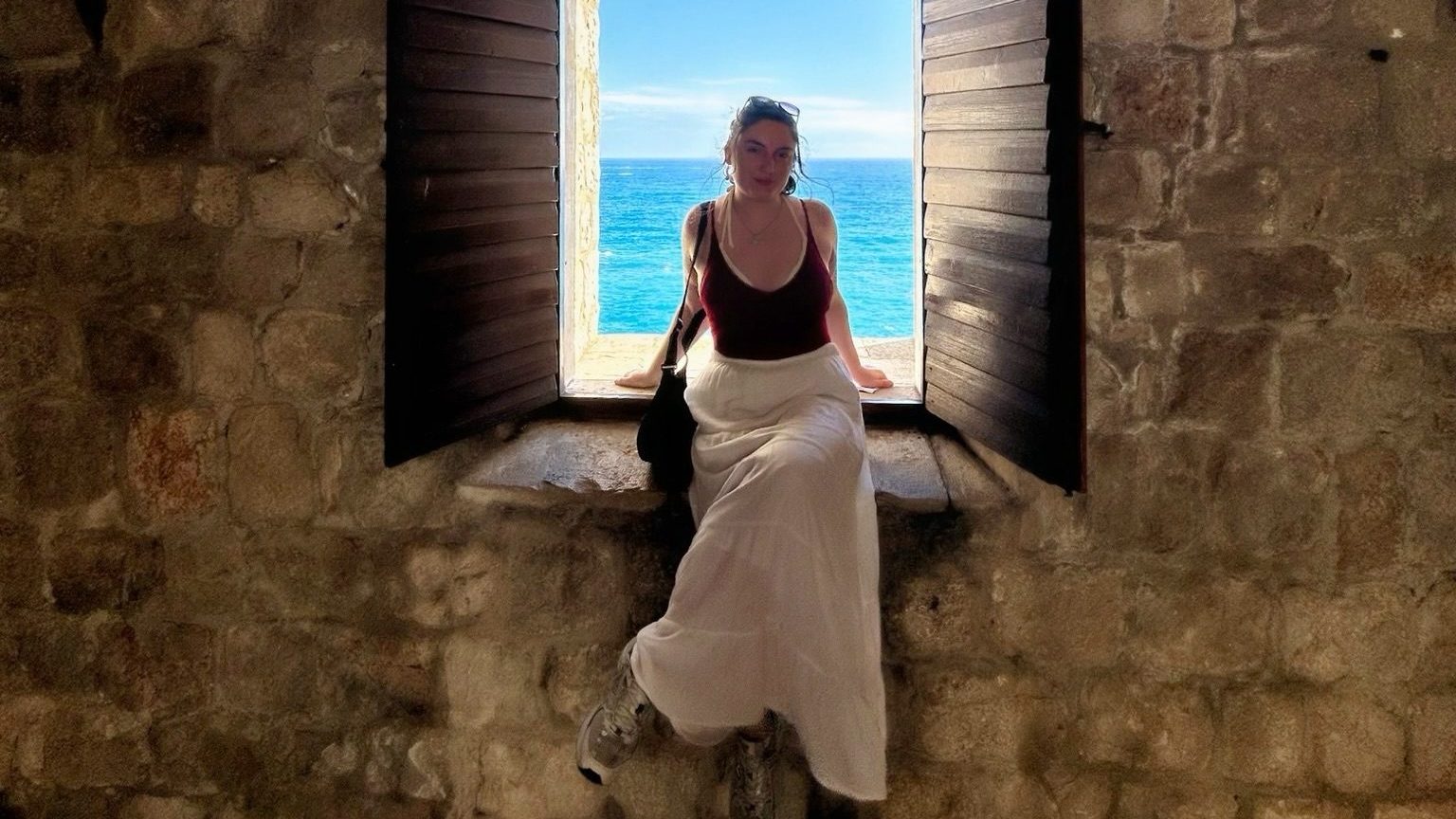
After a month-long trip around Europe, I noticed significant changes in myself. The most prominent change I can see and feel is my increase in confidence and self-efficacy. I now truly believe that I can strive for and attain what I want in life. The fact that I achieved a goal I once considered out of reach—traveling through Europe—gave me the confidence to pursue other challenges. My travels have significantly contributed to my personal growth. The most noticeable changes have been my increased self-confidence, deeper understanding of the world, and a better sense of who I am and my abilities. Travelling inspired me to take the leap and start this blog. It also taught me that I am capable of achieving anything I set my mind to—even if it initially seems a bit outlandish.
I now firmly believe that with determination and the courage to take the first step, I can accomplish whatever I want.
Interrailing, in particular, played a pivotal role in boosting my self-belief. It was a journey I had always dreamed of but never thought I would have the opportunity, confidence, or resources to pursue. By making it happen, I proved to myself that I can follow through on my goals, no matter how ambitious they may seem.
Now, I would happily consider solo travel—something I never imagined I would want to do before my time Interrailing. It’s remarkable how travel has managed to unlock new opportunities, possibilities and perspectives for me. Moreover, my travels expanded my education by allowing me to learn about new cultures, read about history, and experience places firsthand.
Ultimately, travel has made me more well-rounded. It not only enhanced my education and cultural awareness but also encouraged me to take risks and proved that I have the ability to accomplish amazing things. Even the small things, like riding an e-scooter—something I found scary beforehand— is now a new source of confidence and excitement for me.
So, What Do We Think? Does Travel Change You?
Clearly, there is a profound amount of evidence suggesting that travel can change you, often in positive ways. Travel can lead to meaningful personal growth, especially through immersion in new cultures and environments. While the immediate mood boost from a trip may be temporary, the experiences can build confidence, adaptability, and self-efficacy. Whether traveling solo or in a group, overcoming challenges and forming connections fosters lasting change, enhances self-awareness, and broadens perspectives. Travel not only opens new physical spaces but also unlocks new possibilities within ourselves.
I’m happy to say that I have experienced changes due to travel. I look forward to continuing my travels and learning more about the world. Hopefully, I’ll soon be able to step into Asia and see the stark differences between European and Asian cultures. See you there!
Author
Why Readers Trust Travel Girls Corner
Travel Girls Corner is built by women who genuinely love to travel, and who actually do it. Every guide, itinerary, and recommendation is written by female travellers who are constantly exploring the world, from long European rail adventures to far-flung global escapes.
Our founder has been travelling for years, including a five-week Interrail journey across Europe, and many of our contributors are always on the move — discovering new cities, revisiting favourites, and keeping our guides modern and up to date.
What makes us different?
- Travel guides written exclusively by women
- Authentic, firsthand experiences combined with curated research
- Hidden gems alongside iconic highlights
- Modern, comprehensive city guides — not just surface-level lists
- Real recommendations we genuinely love
We go beyond tourist attractions. You’ll find stylish jazz bars, local neighbourhood cafés, boutique stays, cultural spots, practical transport advice, and detailed planning support — all designed to help women travel confidently and experience destinations fully.
We’re not a faceless travel blog brand. We’re ordinary women who travel often, care deeply, and share what we discover. Meet the team here.
Whether you’re planning a city break, a European adventure, or a long-haul escape, Travel Girls Corner offers authentic travel guides written by women, for women — comprehensive, trustworthy, and always evolving.
Explore more destinations, discover hidden gems, and plan your next trip
Editorial Policy
At Travel Girls Corner, everything we share is rooted in real travel experiences. Our content is created by a team of women travelers of different ages and backgrounds, offering well-rounded perspectives on destinations, itineraries, and travel tips. We are always welcoming more women to join our team, helping us amplify diverse voices and share even more amazing travel experiences.
We combine personal experience with thoughtful research to provide accurate, practical, and honest guidance. While we strive to ensure information is as current as possible at the time of publication, travel details—like opening hours, transport schedules, or local conditions—can change. We encourage readers to double-check important details before planning their trips.
Some links on this site may be affiliate links, which means we may earn a small commission at no extra cost to you. This helps us keep Travel Girls Corner running while continuing to share authentic, experience-led travel content.
Every recommendation, guide, and tip reflects experiences we genuinely love—from hidden gems to must-see highlights. We do not exaggerate or sensationalize; we share what we truly encounter and enjoy, with honesty and integrity at the heart of our editorial approach.